Stop Counting Strains — Your Gut Wants a Crowd, Not a Clone Army
Walk down the supplement aisle at any Whole Foods or Sprouts and you'll see the same arms race playing out on every label. 50 billion CFUs! 24 strains! Maximum potency! The implicit promise is simple: more is better. Load your gut up with enough bacteria and good things will happen.
Except that's not really how it works.
A growing body of research is pointing toward a quieter, more nuanced truth — one that fermenters have been living out in their kitchens for centuries without needing a clinical trial to back it up. What your gut microbiome actually thrives on isn't quantity. It's variety. Genuine, wide-ranging, cross-cultural microbial variety. And the fastest path to that variety isn't a pill. It's a rotation of thoughtfully fermented foods from different traditions, climates, and substrates.
The Diversity Problem Nobody's Talking About
Your gut is home to somewhere between 500 and 1,000 distinct species of microorganisms, depending on whose estimate you trust. They don't all do the same thing. Some break down fiber. Others synthesize vitamins. Some regulate inflammation. Others communicate directly with your nervous system. It's less like a team and more like an entire ecosystem — a rainforest, not a monoculture cornfield.
Here's where the supplement model starts to crack. Even a high-end probiotic with 20 or 30 strains is still delivering a relatively narrow slice of that ecosystem. You're seeding the rainforest with two dozen species of trees and calling it done. Meanwhile, a traditionally fermented kimchi contains a shifting, dynamic community of Lactobacillus, Leuconostoc, and Weissella species that changes week by week as fermentation progresses. A live-culture kombucha carries yeasts alongside bacteria. A well-aged miso introduces entirely different microbial players, shaped by koji mold and time.
Researchers at Stanford made waves in 2021 when they published a study in Cell showing that a high-fermented-food diet increased microbiome diversity and decreased markers of inflammation — more effectively than a high-fiber diet alone. The key wasn't any one fermented food. It was the range.
Why Traditional Fermentation Gets This Right by Accident
Here's something worth sitting with: traditional fermented foods weren't designed to optimize the microbiome. They were designed to preserve food, feed families, and survive winters. The microbial diversity they create is essentially a byproduct of doing things the slow, hands-on way.
Take kimchi. A Korean grandmother making baechu-kimchi in her kitchen isn't thinking about Lactobacillus plantarum inoculation rates. She's thinking about the right amount of gochugaru, the texture of the cabbage, whether the weather is cool enough. But the process she's following — wild fermentation, no starter cultures, time-honored ratios of salt and vegetable — naturally cultivates a complex microbial community that no supplement manufacturer has successfully replicated in a capsule.
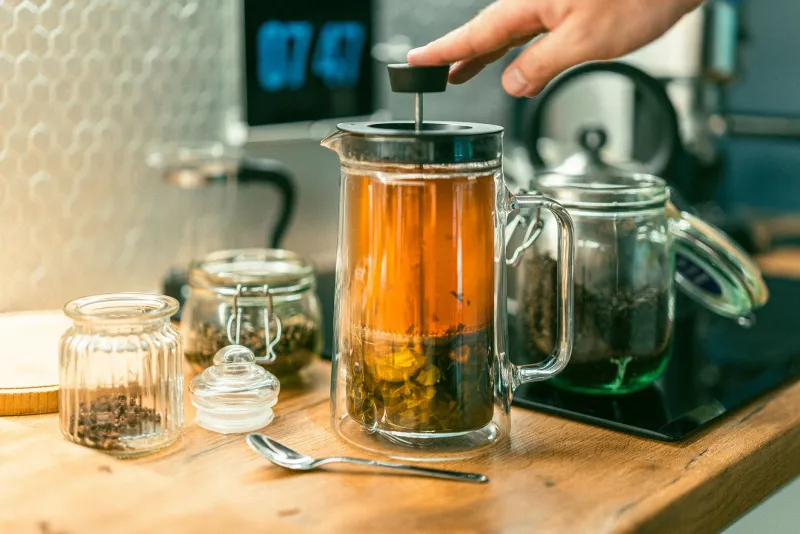
The same is true of sourdough, of traditionally brewed kombucha with a living SCOBY, of unpasteurized sauerkraut, of kefir made from live grains rather than a powdered starter. These foods carry microbial ecosystems shaped by their ingredients, their environment, and their maker's hands. That's not romanticism. That's biology.
The Rotation Principle: Building a Diverse Fermented Food Practice
So what does a diversity-focused approach actually look like in practice? It's less about eating more fermented food and more about eating differently fermented food on a regular basis.
Think of it like crop rotation for your gut. If you eat the same store-bought yogurt every morning, you're delivering roughly the same two or three strains day after day. Your gut gets good at hosting those particular guests. But it doesn't necessarily expand its hospitality.
A smarter approach looks something like this:
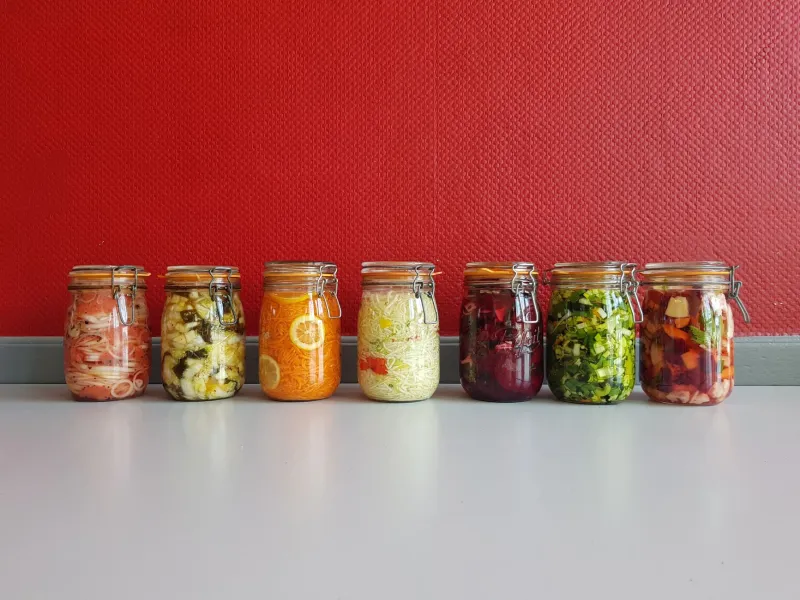
Vary your fermented bases. Rotate between dairy-based ferments (yogurt, kefir), vegetable ferments (kimchi, sauerkraut, curtido), and beverage ferments (kombucha, water kefir, kvass). Each category introduces different microbial families.
Don't just vary the food — vary the source. Homemade kimchi made with your local water and your hands carries different microbes than a jar from a Korean grocery store, which carries different microbes than a nationally distributed brand. This isn't a knock on any of them. It's an argument for mixing them up.
Embrace ferments you haven't tried yet. Tepache, the Mexican fermented pineapple drink, introduces yeasts and bacteria shaped by tropical fruit. Injera, the Ethiopian fermented flatbread, brings teff-based organisms into the picture. The more cultural traditions you draw from, the wider your microbial net.
Give your gut time to adjust between introductions. Flooding your system with five new fermented foods in a week isn't the goal. Slow, steady expansion — adding one new ferment every week or two — gives your microbiome time to actually integrate new arrivals rather than just flush them through.
Where Supplements Still Have a Role
None of this means probiotic supplements are useless. For people recovering from a course of antibiotics, managing specific GI conditions, or navigating a diet that makes getting fermented foods difficult, targeted supplementation has real value. Certain clinical applications — Lactobacillus rhamnosus GG for antibiotic-associated diarrhea, for example — have solid evidence behind them.
But as a long-term strategy for building a resilient, diverse, well-functioning gut microbiome? A capsule is a pretty thin substitute for an actual food practice. It's the difference between taking a multivitamin and eating a varied, whole-food diet. One can plug gaps. The other builds the foundation.
The Hale Perspective
At Hale Fermented, we've always believed that fermentation is inherently about abundance — not the abundance of any single thing, but the abundance that comes from variety, from tradition, from letting time and microbes do their work without shortcuts. The science is now catching up to what fermenters have practiced intuitively for generations.
Your gut doesn't want a clone army of identical bacteria marching in from a blister pack. It wants the messy, varied, living complexity that comes from a jar of kimchi that's been fermenting for three weeks, a bottle of kombucha that's been on its second ferment for two days, a spoonful of miso stirred into broth at the last minute so the heat doesn't kill what's living in it.
That's not a supplement. That's a food culture. And it's one worth building.
Want to start rotating? Our guides on beginner kimchi, first-time kombucha brewing, and simple lacto-fermented vegetables are a good place to begin.