They Figured It Out Thousands of Years Ago: How Ancient Fermentation Got the Science Right Before the Scientists Did
There's a particular kind of humbling that happens when modern science catches up to something your great-great-grandmother already knew. It happens in medicine. It happens in agriculture. And it happens, over and over again, in fermentation.
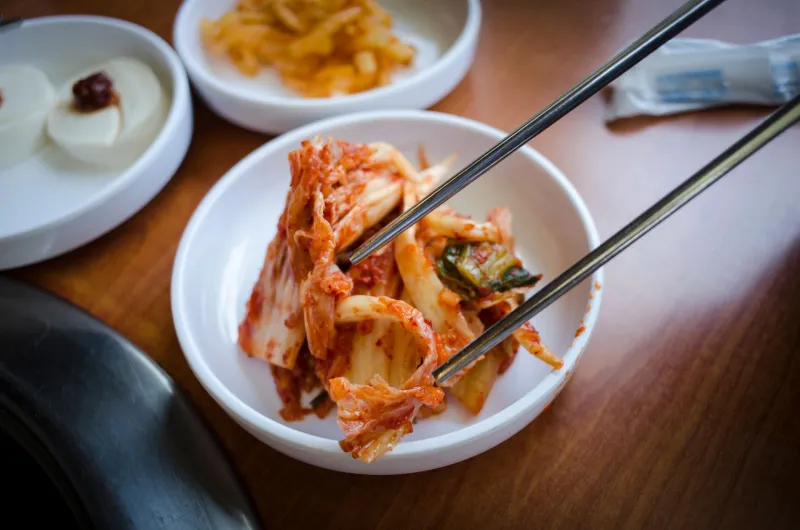
We talk about probiotic foods like they're a recent invention — something that arrived alongside cold-pressed juice and adaptogen lattes. But the techniques behind kimchi, koji, kefir, and dozens of other fermented staples weren't invented to chase a wellness trend. They were developed over centuries, refined through trial and error, passed down through families and communities who had no vocabulary for "bioavailability" or "microbial diversity" but who absolutely understood that these foods made people feel better, last longer, and thrive.
Here's the part that should genuinely stop you in your tracks: they were right. And nutritional science is only now building the vocabulary to explain why.
Koji and the Protein Puzzle Nobody Knew They Were Solving
Let's start in Japan, where Aspergillus oryzae — the mold at the heart of koji — has been doing its quiet, transformative work for over a thousand years. Koji is the foundation of miso, sake, soy sauce, and amazake, and for most of its history, the people making it understood it through the lens of flavor and tradition, not biochemistry.
What they couldn't have articulated — but were absolutely leveraging — is that koji produces enzymes called proteases and amylases that break down complex proteins and starches into forms the human body can absorb far more efficiently. Modern nutritional science calls this "enhanced bioavailability." Ancient Japanese fermenters called it dinner.
Researchers studying traditional Japanese diets have found that the fermentation process in miso, for instance, doesn't just preserve soybeans — it fundamentally transforms them. Proteins that would otherwise require significant digestive effort become pre-digested, essentially. Phytic acid, an antinutrient that binds to minerals and blocks absorption, gets substantially reduced. The same handful of soybeans delivers meaningfully more usable nutrition after fermentation than before it.
Somebody figured that out without a single controlled trial. They figured it out because communities that ate this way were healthier, and so the practice continued.
Rejuvelac, Grain Ferments, and the Antinutrient Problem
Move westward toward the ancient Middle East and you encounter grain-based fermentation traditions that predate written history. Rejuvelac — a fermented grain beverage made from sprouted wheat or other grains — has roots in traditional food cultures across the region, though its modern American revival is largely credited to natural health advocates in the 20th century.
The underlying principle, though, is ancient: soaking, sprouting, and fermenting grains dramatically reduces phytates and lectins, two compounds that interfere with how well your body absorbs zinc, iron, calcium, and magnesium. Traditional sourdough bread — which involves a multi-day fermentation process — accomplishes something similar. The long ferment that grandmothers insisted upon wasn't superstition. It was, we now understand, a functional process that made the bread genuinely more nutritious.
Modern industrial bread skips this entirely. Fermentation takes time, and time costs money, so we've engineered it out of our food supply and then wondered why so many people feel vaguely terrible after eating wheat. The ancestral technique wasn't inefficient. We just stopped doing it.
Kvass, Lacto-Fermentation, and the Vitamin Question
In Eastern Europe, kvass — a fermented beverage made from rye bread — has been a dietary staple for centuries. So has sauerkraut, which historically served as a critical source of nutrition through long winters when fresh vegetables were unavailable. Sailors famously used fermented cabbage to prevent scurvy on extended voyages, long before anyone had isolated vitamin C or understood what scurvy actually was.
What they knew empirically was that the fermented stuff kept people healthier. What science has since confirmed is that lacto-fermentation actually increases certain vitamin levels in vegetables rather than depleting them. B vitamins, in particular, can be synthesized during fermentation by the bacteria themselves. You start with cabbage and salt, and the microbial community that develops doesn't just preserve the cabbage — it enriches it.
This is a detail that tends to genuinely surprise people. We assume fermentation is about preservation, about stopping spoilage. And it is. But it's also an active nutritional upgrade happening at the microbial level, and the people who developed these traditions noticed the results even if they couldn't explain the mechanism.
So Why Are We Treating This Like a Discovery?
This is the question that keeps coming up, and it's worth sitting with for a moment.
Fermented foods are everywhere in American wellness culture right now — on grocery shelves, in smoothie bars, in podcast sponsorships. And that visibility is genuinely good. More people eating living foods is a net positive. But the framing is often wrong in a way that matters.
We present fermentation as something scientists have recently figured out that ancient cultures stumbled into by accident. The reality is closer to the opposite. These techniques were deliberate, refined over generations, and embedded in cultural practices precisely because they worked. Modern science isn't discovering fermentation — it's reverse-engineering it. It's building frameworks to explain something that communities around the world already knew was true.
There's a certain arrogance in treating traditional food knowledge as a rough draft waiting for scientific validation. The validation is welcome. The condescension embedded in the framing is worth examining.
What Our Bodies Actually Remember
Here's a perspective worth considering: humans have been eating fermented foods for so long — tens of thousands of years, by some estimates — that our digestive systems may have literally evolved in relationship with them. The microbial communities in fermented foods aren't foreign invaders our immune systems have to negotiate with. For much of human history, they were a constant presence in our diet.
The gut microbiome research emerging over the last two decades points in this direction. Diverse microbial exposure, particularly from food sources rather than supplements, appears to support immune regulation, mood stability, metabolic function, and inflammation response in ways that isolated probiotic strains often can't replicate. Traditional fermented diets delivered that diversity automatically, as a byproduct of eating culturally.
When we strip fermentation out of our food supply — which industrial food production has largely done — and then try to add it back in through capsules and fortified yogurt, we're doing a pale imitation of something that used to happen seamlessly.
The Jar Is the Archive
At Hale Fermented, we think about this a lot. Every crock of kimchi, every bottle of kombucha, every jar of miso is carrying forward a body of knowledge that predates nutrition labels by millennia. The people who developed these foods were working from observation, from community memory, from a deep and practical understanding of what kept bodies well.
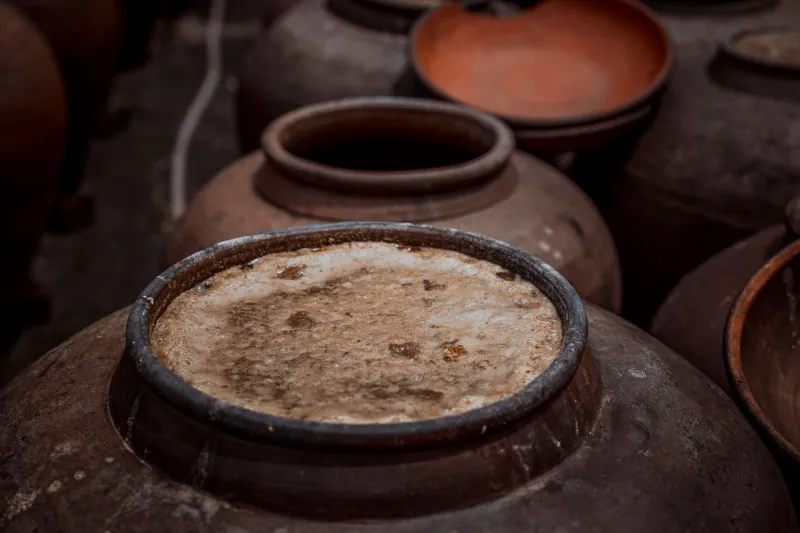
Modern science is a powerful tool for understanding why those observations were correct. But let's not mistake the explanation for the discovery. The discovery happened a very long time ago, in kitchens and cellars and clay pots, by people who were paying close attention to what their food was doing.
We're still paying attention. And the jar, it turns out, has been keeping receipts all along.