Brine and Memory: The Americans Digging Up Lost Regional Fermentation Traditions Before They Disappear Forever
Something Was Almost Lost
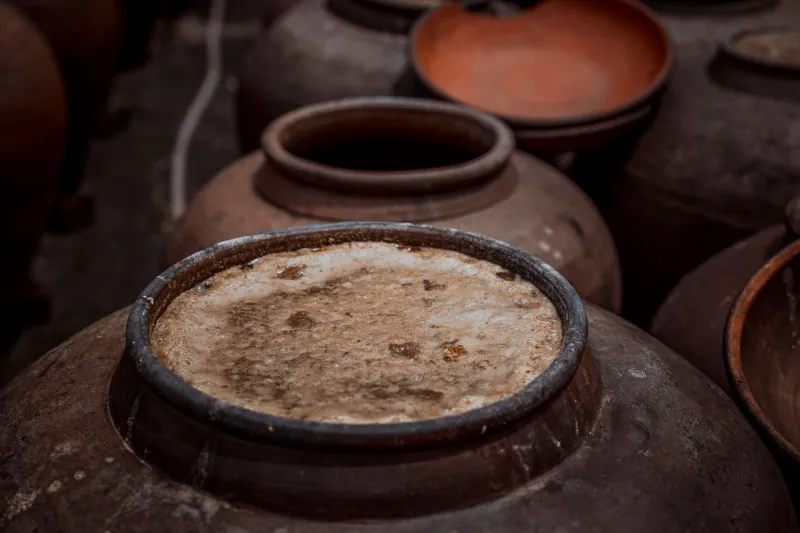
In a holler in eastern Kentucky, a woman named Darlene keeps a clay crock on her back porch that belonged to her grandmother's grandmother. She doesn't know exactly how old it is. What she does know is the recipe that goes with it — a half-remembered thing, reconstructed from a handwritten card, two phone calls with elderly cousins, and a lot of trial and error. Green beans. Salt. Time. The result is something tangy and alive that doesn't have a name in any cookbook she's ever found.
"People around here used to put up vegetables this way every fall," she says. "Then everybody got refrigerators and freezers and it just... stopped."
That gap — between what was practiced for generations and what nearly vanished within a single lifetime — is where a growing movement of American fermenters is doing some of its most important work.
The Archaeology of the Pantry
Call it fermentation archaeology. Across the country, a loose, largely self-organized network of home fermenters, small-batch producers, and food historians is excavating regional preservation traditions that came within a generation of disappearing entirely. They're digging through handwritten recipe boxes, oral histories, agricultural extension archives, and the memories of grandparents who were once told that their old ways were outdated.
What they're finding is extraordinary in its variety.
In the upper Midwest — Minnesota, Wisconsin, the Dakotas — Scandinavian and German immigrant communities built fermentation cultures that went far beyond the sauerkraut most Americans recognize. Turnip ferments. Fermented beet kvass. Whole-head cabbage brines that took months to develop. Many of these traditions survived quietly in church basements and family farms long after they disappeared from mainstream food culture. Now, a handful of small producers and home fermenters are bringing them back, often working directly with elder community members to get the details right.
In Appalachia, the tradition of apple scrap vinegar — made from cores and peels left over from canning season — is being rediscovered as both a practical zero-waste practice and a genuinely complex condiment with a flavor profile that commercial apple cider vinegar can't replicate. A small producer in western North Carolina now sells it at regional farmers markets, where it routinely sells out.
Along the Gulf Coast, fermented hot sauces with roots in West African and Creole foodways are being documented and revived by food writers and community cooks who argue — convincingly — that Louisiana's fermentation heritage is far older and more diverse than the commercial hot sauce industry would suggest.
Why It Almost Disappeared
The twentieth century was not kind to fermentation traditions. Refrigeration made preservation less urgent. Industrialized food production made homemade ferments seem unnecessary, even primitive. The postwar push toward convenience foods actively discouraged the kind of slow, attentive kitchen work that fermentation requires.
There was also, in many communities, a complicated cultural dimension. Immigrant families who faced pressure to assimilate sometimes deliberately shed their food traditions, including fermentation practices, as a way of fitting in. What grandma made in the cellar became something to move away from, not carry forward.
The result is a patchwork of loss — some traditions documented, many not, some surviving in isolated pockets, others gone entirely.
"We're in a race," says one food historian who has spent years interviewing elderly fermenters in the rural South. "The people who hold this knowledge in their heads are in their 70s and 80s. If we don't document it now, it's gone."
More Than Nostalgia
It would be easy to frame this movement as purely sentimental — a bunch of people romanticizing the past. But the fermenters doing this work are quick to push back on that characterization.
For one thing, the practical case for regional fermentation traditions is strong. These techniques were developed specifically for local climates, local crops, and local microbial environments. An Appalachian brine recipe isn't just culturally interesting — it reflects centuries of accumulated knowledge about how fermentation behaves in that specific geography, with those specific vegetables, in those specific seasonal conditions.
For another, there's a food resilience argument that's hard to dismiss. Regional fermentation traditions represent a form of food sovereignty — the ability of a community to preserve its own harvest, manage its own food supply, and maintain nutritional security without depending entirely on industrial supply chains. In a moment when those supply chains have proven themselves vulnerable, that knowledge has renewed practical value.
And then there's the identity piece, which is maybe the most powerful of all. Food is memory made edible. When a community loses its fermentation traditions, it loses something that can't be fully replaced by a cookbook or a YouTube tutorial. The muscle memory, the sensory knowledge, the understanding of when something smells right — these are embodied forms of cultural knowledge that only survive through practice.
The People Doing the Work
The revival isn't happening in culinary schools or food media headquarters. It's happening in backyards, at farmers markets, in community kitchens, and in the comment sections of small regional food blogs where people swap tips and ask questions that no professional chef can answer.
It's Darlene in Kentucky and her clay crock. It's a retired teacher in Minnesota who's been quietly teaching fermentation workshops at her local library for three years. It's a pair of friends in New Orleans who started a small-batch fermented hot sauce company specifically to document and honor Creole preservation methods. It's a farmer in the Ozarks who's growing heritage vegetable varieties specifically because they ferment differently — better, she says — than modern cultivars.
None of them would call themselves activists. Most of them would just say they're doing what feels right, what feels necessary, what feels like something that shouldn't be allowed to slip away.
At Hale Fermented, we think that's exactly what food culture is supposed to look like — rooted, living, passed forward. Not preserved under glass, but alive in the crock, the jar, the kitchen, the conversation.
The brine remembers. So do the people who make it.