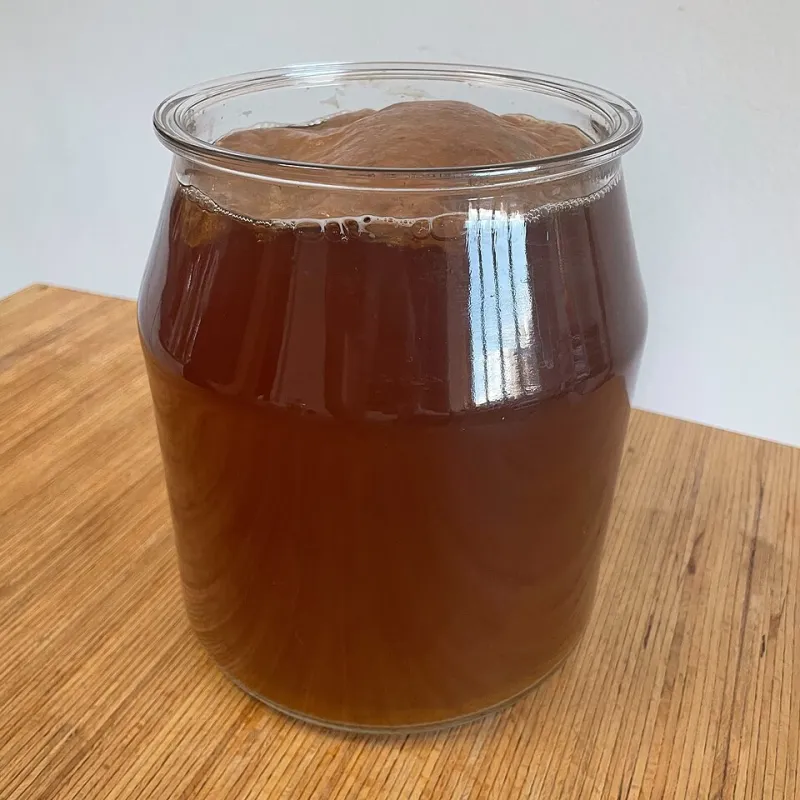
Dead on Delivery: The Dirty Secret Behind Most 'Probiotic' Foods at the Grocery Store
Walk down the refrigerated aisle of any Whole Foods, Trader Joe's, or even your neighborhood Kroger, and you'll be greeted by a wall of products promising to transform your gut microbiome. Kombucha in every flavor imaginable. Yogurt cups stacked to the ceiling. Kimchi jars dressed up with sleek labels and wellness buzzwords. The word probiotic is practically wallpaper at this point.
But here's the uncomfortable truth that most of those brands would rather you not think too hard about: a significant portion of the "live cultures" they're advertising are dead before the product ever reaches your hands.
This isn't a fringe conspiracy theory. It's basic food science—and once you understand what's actually happening inside those pretty bottles, you'll never look at a supplement aisle the same way again.
What "Live and Active Cultures" Actually Means (And What It Doesn't)
The phrase "live and active cultures" is one of the most misused claims in the food industry. The National Yogurt Association has a certification program that requires a minimum of 100 million cultures per gram at the time of manufacture. At the time of manufacture. That's a critical distinction. By the time that yogurt travels from a processing facility in the Midwest, sits in a distribution warehouse, gets shipped to a store, and finally lands in your refrigerator at home, weeks—sometimes months—may have passed. Bacterial populations don't stay static. They decline.
With fermented beverages like kombucha, the situation gets even murkier. Some of the biggest commercial brands pasteurize their product after fermentation is complete. Pasteurization—the heat treatment process that kills harmful pathogens—absolutely does what it's designed to do. It also kills beneficial bacteria and yeast with zero discrimination. What you're left with is a drink that tastes like kombucha, has the fizz of kombucha, but carries none of the microbial life that made traditional kombucha worth drinking in the first place.
Some manufacturers then add probiotic strains back in after pasteurization. But adding isolated bacterial strains to a sterile liquid is a fundamentally different thing than a ferment that has developed its own complex, living ecosystem over days or weeks.
The Shelf-Life Problem Nobody Talks About
Commercial food production operates under a set of priorities that don't always align with your health goals. Shelf life, consistency, scalability, and food safety regulations all push manufacturers toward processing methods that extend the window during which a product looks and tastes acceptable. Fermented foods, by their very nature, are alive and changing. That's inconvenient for a supply chain built around predictability.
Heat treatment is the most common solution. Flash pasteurization can happen at temperatures between 160°F and 165°F for just a few seconds—enough to neutralize bacterial activity entirely. Some shelf-stable kimchi products undergo similar treatments, which is why you'll find kimchi sitting on an unrefrigerated grocery shelf without any concern. Real, traditionally fermented kimchi belongs in the refrigerator because it's still actively fermenting. The fact that a product doesn't need refrigeration is often your first clue that nothing living is left inside it.
Extended shelf-life protocols also include the use of preservatives and the addition of vinegar as a shortcut. Vinegar-based "fermented" products—certain pickles, some hot sauces, plenty of commercial sauerkraut—are acidic and shelf-stable, but they were never actually fermented. The sour flavor mimics lacto-fermentation without any of the microbial activity that makes the real process so valuable.
How to Read a Label Like You Actually Know What You're Looking For
The good news is that with a little label literacy, you can start sorting the real from the theater pretty quickly.
Look for refrigeration requirements. A living fermented product needs to stay cold. If kombucha, kefir, kimchi, or sauerkraut is sitting on an unrefrigerated shelf, treat it as a processed food, not a probiotic one.
Check the ingredients for vinegar. In a product claiming to be fermented, vinegar is a red flag. Real lacto-fermentation produces lactic acid naturally through bacterial activity. Adding vinegar bypasses that process entirely and leaves you with a product that's acidic but not alive.
Scan for the word "pasteurized." Some brands are upfront about it. Others bury it in fine print or simply don't disclose it. When in doubt, reach out to the company directly and ask about their processing methods. Brands that are proud of their fermentation process will tell you enthusiastically. Brands that aren't will hedge.
Look for strain specificity. Genuine probiotic products—if they're adding cultures post-production—should name the specific strains included (e.g., Lactobacillus acidophilus, Bifidobacterium longum). Generic phrases like "contains live cultures" without specifics are a marketing move, not a meaningful health claim.
CFU counts matter, but timing matters more. Colony-forming units (CFUs) tell you how many bacteria are present, but only at a specific moment. A product with 10 billion CFUs at manufacture might have a fraction of that by the time it reaches you. Look for products that guarantee CFU counts at time of consumption, not just at production.
What Authentic Fermentation Actually Looks Like
At Hale Fermented, we've built everything around one guiding principle: if we wouldn't eat it ourselves, we won't sell it. That means raw, unpasteurized ferments that are still doing what fermented foods have always done—teeming with beneficial bacteria, continuing to develop complexity, and arriving at your table as alive as the day we packed them.
Our kombucha is never heat-treated after fermentation. Our kimchi is made through traditional lacto-fermentation with no vinegar shortcuts. Every product we make requires refrigeration because every product we make is still alive. That's not a marketing angle. That's just what fermented food is supposed to be.
The fermentation paradox is real: an industry built around selling you the benefits of living food has largely figured out how to deliver dead food at scale. But once you know what to look for, you can opt out of that system entirely.
Your gut deserves the real thing. And the real thing is absolutely worth seeking out.