From Sweet Tea to Tangy Gold: What Brew Time Actually Does to Your Kombucha
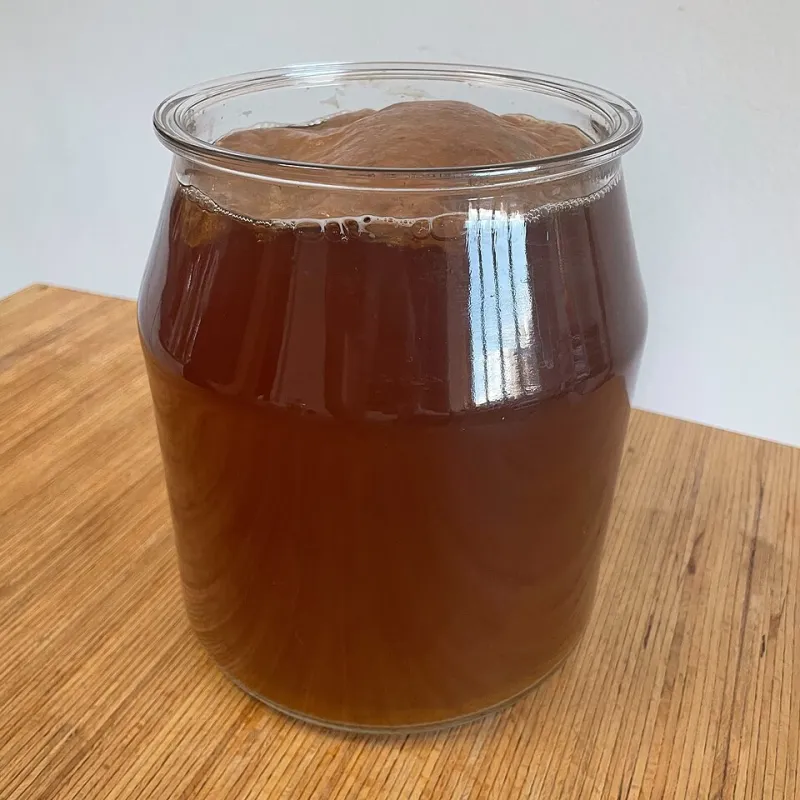
Photo: Shisma, CC0, via Wikimedia Commons
There's a moment in every kombucha ferment — somewhere between day five and day ten — where sweet tea quietly becomes something alive. The SCOBY (that rubbery disc of bacteria and yeast floating at the top) is doing serious biochemical work, and the clock is running. But here's the thing: most people, whether they're brewing at home or just picking up a bottle at the farmers market, have no real idea what brew time means for what they're consuming.
Let's fix that.
The Biology Behind the Brew
Kombucha fermentation happens in two main phases. The first fermentation — called 1F — is where sweet tea meets the SCOBY and the transformation begins. Yeast breaks down sucrose into glucose and fructose, then converts those sugars into ethanol and carbon dioxide. Meanwhile, bacteria (primarily Acetobacter and Gluconobacter species) convert that ethanol into organic acids, chiefly acetic acid and gluconic acid. These acids are responsible for kombucha's signature tang, and they're also key players in its gut-health reputation.
The second fermentation — 2F — is where brewers add fruit, juice, or other flavorings, seal the bottles, and let carbonation build. This phase is shorter, typically 24 to 72 hours at room temperature, but it's where a lot of the fizz magic happens.
Brew time isn't just a number. It's a dial that controls flavor, acidity, carbonation, residual sugar, and — critically — the concentration of live cultures.
Short Brews (5–7 Days): Sweeter, Milder, Less Complex
A kombucha that's pulled early tends to taste closer to its sweet tea origins. There's still significant residual sugar because the yeast hasn't had enough time to fully convert it. The pH is higher (less acidic), usually sitting around 3.5 or above. Carbonation is lower unless the second ferment compensates.
From a probiotic standpoint, a shorter brew contains live cultures, but the bacterial colony hasn't had time to fully establish its density. You're getting some benefit — but you're not getting the full picture.
Short brews are popular for beginners and for brands targeting consumers who find traditional kombucha too sour. They're more approachable, but if you're drinking kombucha primarily for gut support, they're not your most powerful option.
Medium Brews (8–14 Days): The Sweet Spot
Most experienced home brewers and quality-focused producers land here. By day eight, the pH typically drops below 3.2, acetic acid concentration rises noticeably, and the flavor profile deepens into something genuinely complex — tart, slightly vinegary, with effervescence that feels earned rather than injected.
Probiotic activity is robust at this stage. The organic acid environment is inhospitable to harmful bacteria, which means the good cultures are thriving largely unchallenged. Residual sugar is lower, which matters for people monitoring their sugar intake.
This is also the range where you start tasting what your tea base actually contributes. A green tea kombucha brewed for 10 days tastes meaningfully different from a black tea base at the same stage — the terroir of fermentation, if you will.
Long Brews (15+ Days): Vinegar Territory
Leave it long enough and your kombucha starts flirting with apple cider vinegar. The acidity becomes sharp and dominant, residual sweetness is nearly gone, and carbonation can actually decrease because extended fermentation can compromise the SCOBY's ability to retain CO₂ during 2F.
That's not necessarily bad. Some brewers intentionally push long ferments to create a kombucha concentrate used as a cooking ingredient or diluted with sparkling water. The probiotic load is high, but the palatability for everyday drinking drops off for most people.
Long ferments are also where you need to watch for signs of contamination. More time means more opportunity for mold or off-bacteria to establish themselves if your brewing environment isn't clean.
Troubleshooting Common Timing Mistakes
Too sweet after bottling? Your 1F was probably too short, or your fermentation environment is too cool (below 70°F slows the whole process significantly). Try extending your 1F by two to three days or moving your vessel somewhere warmer.
Too sour, almost undrinkable? You likely over-fermented in 1F, or your SCOBY is unusually active. Next batch, pull it two days earlier and taste-test daily starting on day five.
Flat, no carbonation? Insufficient residual sugar going into 2F is the usual culprit — your 1F ran too long and the yeast had nothing left to work with. Alternatively, your 2F bottles weren't sealed properly. Make sure you're using flip-top bottles or tight-sealing caps.
Exploding bottles? You added too much sugar or fruit during 2F, or your 2F ran too long. Always burp your bottles once a day during second ferment and refrigerate promptly to halt activity.
Stringy brown stuff in the bottle? That's yeast strands — completely normal, completely harmless, and actually a sign of an active culture. Shake it in or strain it out, your call.
What to Look for When You're Buying, Not Brewing
Not everyone has the time or inclination to keep a SCOBY in their kitchen (fair enough). But if you're buying kombucha and care about what you're actually getting, here are a few things worth knowing:
- "Raw" or "naturally fermented" on the label matters. Pasteurized kombucha has been heat-treated, which kills the live cultures that make it interesting from a gut-health perspective.
- Check the sugar content. A 16-ounce bottle with more than 12 grams of sugar was likely brewed short or had sugar added post-fermentation.
- Sediment is a good sign. A little cloudiness or floaty bits means the cultures are alive and active.
- Refrigeration is non-negotiable for raw kombucha. If it's sitting on an ambient shelf, something's off — either it was pasteurized or it's been fermented to a pH so low that refrigeration is irrelevant (which means it's probably unpleasantly sour).
The Bottom Line
Kombucha is a living product, and brew time is its biography. Every day in the fermentation vessel is a chapter — one that shapes whether you end up with something gently effervescent and lightly sweet, or deeply tangy and probiotic-dense. Neither is wrong. They're just different tools for different moments.
At Hale Fermented, we believe understanding what's actually happening in your food is part of eating well. Not because you need a biochemistry degree to enjoy a good bottle of kombucha — but because when you know what you're tasting, you taste it better.