Tamed and Traded: What Industrial Fermentation Took From Your Jar
There's a reason your grandmother's sauerkraut tasted different from anything you've ever bought in a store. And it wasn't just the recipe.
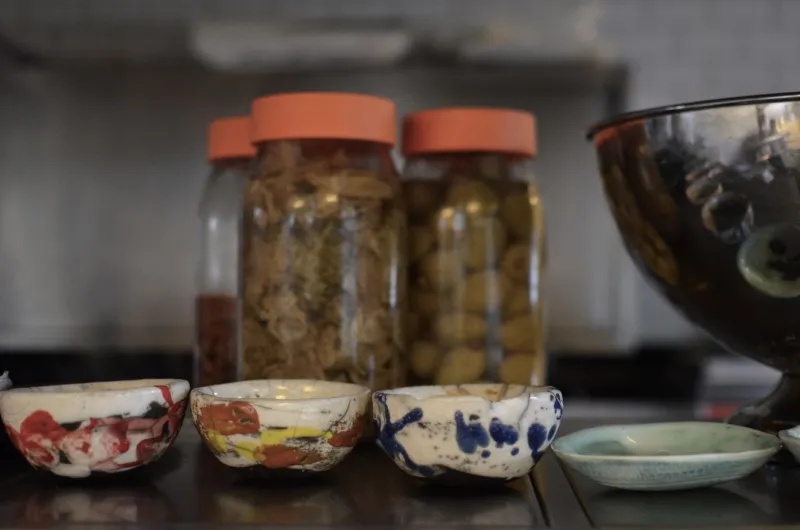
It was the microbes. Specifically, the sprawling, chaotic, hyperlocal community of bacteria and wild yeasts that colonized her crock from the air, her hands, the wooden spoon she'd used for decades, and the particular mineral composition of her well water. That community was unrepeatable. It was also, by most measures of gut health science, more valuable than almost anything a commercial producer has ever bottled.
This is a story about what happened when fermentation got industrialized — and what we're still paying for a century later.
Wild Fermentation: A Brief Primer on Controlled Chaos
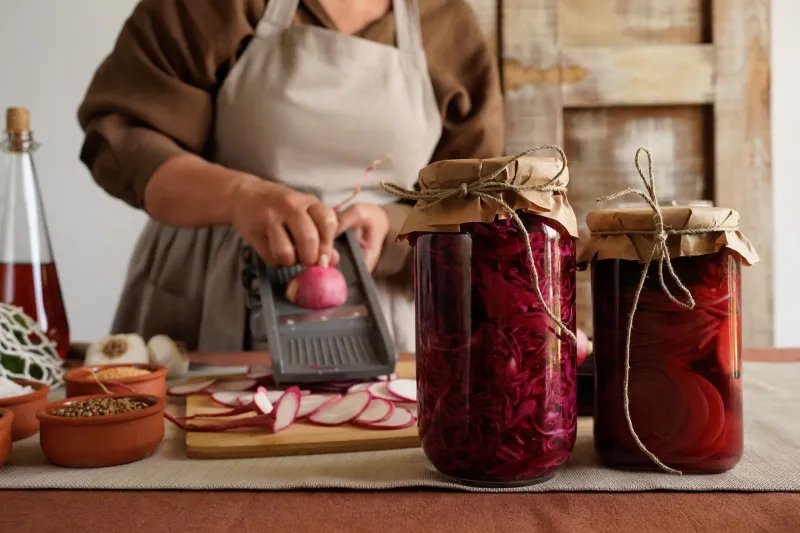
Before industrial food production reshaped the American pantry, fermentation was an act of managed wildness. You created the right conditions — the right salt concentration, the right temperature range, the right vessel — and then you let the environment do the rest. The microorganisms responsible for transforming cabbage into sauerkraut or sweet tea into kombucha weren't introduced from a laboratory packet. They were recruited from the surrounding world.
This wild fermentation process produces what microbiologists call a succession community. In the early stages of a lacto-ferment, for instance, a wide range of bacteria compete for dominance. Gradually, as lactic acid builds and pH drops, the environment selects for increasingly acid-tolerant species. What you end up with after a well-executed wild ferment is a microbial ecosystem with genuine diversity — dozens of species across bacteria and yeasts, each producing different metabolites, organic acids, enzymes, and bioactive compounds.
This diversity wasn't incidental. It was the product.
The Commercial Pivot: Consistency Over Complexity
Industrialization changed the fermentation equation fundamentally, and it did so for reasons that made complete sense from a business perspective. Wild fermentation is unpredictable. Batches fail. Flavors vary. Shelf life is difficult to control. Contamination is a real risk at scale.
The solution the food industry developed over the 20th century was to replace wild microbial succession with controlled starter cultures — carefully selected, laboratory-propagated strains introduced into a sterile or near-sterile substrate. The result is a product that tastes roughly the same every time, fails rarely, and travels well through distribution chains.
Pasteurization became the other major lever. Heat-treating fermented products before sale kills pathogens, extends shelf life dramatically, and gives producers predictable food safety outcomes. It also kills the living microbial communities that made the ferment valuable in the first place. Most commercial sauerkraut, most pickles, most kombucha knockoffs sold in mainstream grocery channels — pasteurized. Dead on arrival as probiotic products, whatever the label implies.
Even among the genuinely unpasteurized commercial ferments, the starter culture problem persists. When your product is built on one, two, or three selected strains rather than a wild succession community, you're delivering a narrow slice of what traditional fermentation once provided.
What the Numbers Actually Show
The microbial diversity gap between wild and commercial fermentation isn't speculative — it's been documented. Studies comparing traditionally fermented foods made with wild cultures against commercially produced equivalents consistently find that the traditionally fermented versions carry significantly higher species diversity, more varied strain representation, and a broader range of fermentation metabolites.
A 2019 analysis of commercial versus artisanal kimchi found that artisanal batches contained up to three times the species diversity of their commercial counterparts. Research on traditionally fermented European dairy products has found similar patterns. The diversity isn't just about having more bacteria — it's about the functional complexity those bacteria create. Different species produce different short-chain fatty acids, different enzymes, different antimicrobial compounds. A monoculture ferment and a wild succession ferment may both technically be "probiotic," but they're not delivering equivalent biological value.
The Terroir of Fermentation
Here's a concept that wine lovers will recognize immediately: terroir. The idea that the specific place a grape is grown — its soil chemistry, microclimate, surrounding flora — leaves an indelible mark on the wine it produces. Wild fermentation has its own version of this.
The bacteria on a head of cabbage grown in Vermont are not the same as those on cabbage from California. The wild yeasts floating through a kitchen in New Orleans are not the ones circulating through a kitchen in Portland, Oregon. When you ferment with wild cultures, you're capturing a microbial snapshot of your specific place and moment. That's not a flaw. That's the whole thing.
Commercial starter cultures, by design, erase this. The same Lactobacillus plantarum strain gets deployed in facilities from coast to coast, producing a product that tastes like it could have been made anywhere — because it could have been.
The Case for Imperfection
Home fermenters know the anxiety of a batch that looks a little different from the last one. The scoby that's thicker than expected. The kimchi that went more sour than planned. The kombucha that came out cloudier than the store-bought version.
This anxiety is, to put it plainly, misplaced.
Those variations are the signature of wild fermentation doing exactly what it's supposed to do. The slight cloudiness is wild yeast activity. The variable sourness reflects the specific bacterial succession that occurred in your particular kitchen, at this particular temperature, with this particular batch of vegetables. The "imperfection" is the diversity. And the diversity is what your gut is actually looking for.
Industrial fermentation solved for shelf stability and predictability. Those are real values in a food system that needs to move products across a continent. But they came at a cost that the industry has never been especially forthcoming about.
What You Can Actually Do
None of this means commercial fermented products are worthless. Genuinely unpasteurized, live-culture products from small producers — the kind you find at farmers markets, local co-ops, and specialty shops — often retain meaningful microbial diversity, especially when made in small batches with minimal starter culture intervention.
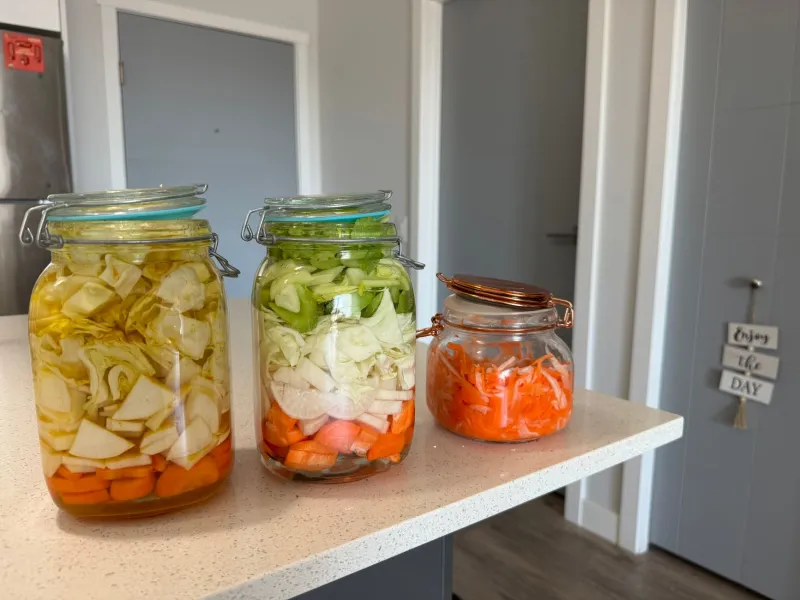
But the most direct path to wild fermentation's full benefit is making it yourself. Your kitchen, your hands, your local produce, your water. The starter culture is the world around you.
That's what Hale Fermented has always been rooted in: the idea that alive with flavor means genuinely, wildly, imperfectly alive. Not alive in the way a carefully controlled laboratory strain is alive. Alive the way your grandmother's crock was alive — with the specific, unrepeatable microbial character of a particular place, time, and pair of hands.
That's what got traded away. And it's absolutely worth taking back.