When Good Bacteria Clash: The Surprising Conflict Between Your Supplements and Your Homemade Ferments
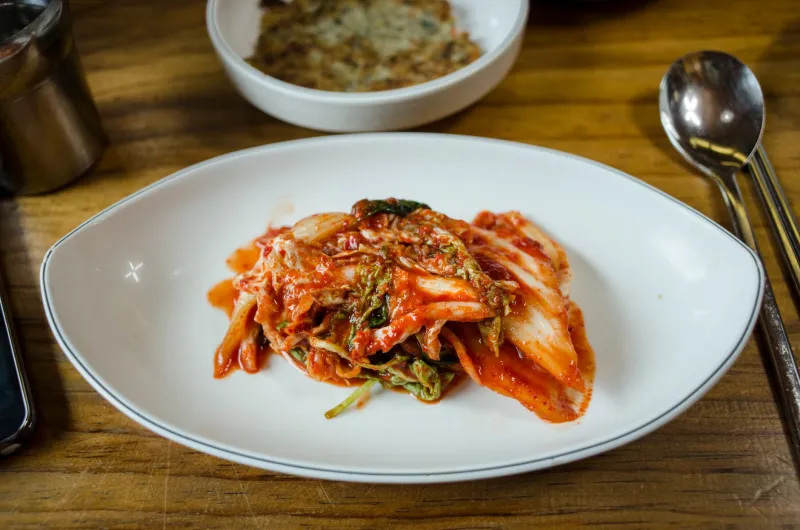
There's a particular kind of satisfaction that comes from pulling a jar of your own kimchi out of the fridge — the tang, the funk, the knowledge that you coaxed something alive out of cabbage and salt. Maybe you've also got a probiotic supplement on your kitchen counter, a bottle of store-bought kefir in the door, and a kombucha habit you picked up at your local farmers market. More good bacteria, better gut health, right?
Not exactly.
The assumption that probiotics are simply additive — that layering sources on top of each other multiplies the benefit — is one of the more persistent myths in the wellness space. And for folks who've put real time and care into home fermentation, it's worth understanding why that assumption can actually undermine the very thing you're working toward.
Your Gut Is Already a Negotiation
Think of your gut microbiome less like an empty auditorium filling up with performers and more like a neighborhood that's already occupied. The microorganisms living in your digestive tract — trillions of them — are constantly competing for space, food, and favorable conditions. When new strains arrive, whether from a supplement capsule or a spoonful of sauerkraut, they don't just slot in peacefully. They have to contend with whoever's already there.
This is the core of microbial ecology, and it matters enormously for how we think about probiotic sources. Different strains produce different metabolites, consume different nutrients, and sometimes actively inhibit competing bacteria through compounds called bacteriocins — essentially microbial antibiotics. A dominant strain in one product might suppress the very strains you're trying to cultivate through your home ferments.
Researchers at the Weizmann Institute in Israel published findings a few years back that genuinely rattled the probiotic industry: when people took standard commercial probiotic supplements, many of them didn't colonize the gut at all. The existing microbial community simply resisted the newcomers. More strikingly, in some cases the supplements actually delayed the recovery of native gut bacteria after antibiotic use — the opposite of what most people take them for.
The Strain Problem Nobody Talks About
Here's where it gets more nuanced. Commercial probiotic supplements — the kind you'd grab at Whole Foods or CVS — typically contain a small number of highly studied strains. Lactobacillus acidophilus, Bifidobacterium longum, maybe a few others. These strains were selected because they're stable, shelf-friendly, and easy to manufacture at scale. They're not necessarily the strains your body needs most, and they're almost certainly not the strains doing the heavy lifting in your home ferments.
Homemade kimchi, for instance, hosts a rotating cast of wild lactic acid bacteria — Leuconostoc mesenteroides early in fermentation, Lactobacillus plantarum as it matures, and dozens of other microorganisms that vary based on your vegetables, your salt ratio, your kitchen temperature, and even the ambient microbes in your home. That biodiversity is a feature, not a bug. It's one of the reasons traditionally fermented foods have been nourishing human guts for thousands of years across cultures.
When you flood your system with a single high-dose commercial strain at the same time, you're potentially creating an uneven competitive environment. That dominant supplement strain may crowd out or inhibit the more delicate wild strains from your homemade ferments before they have a chance to do their thing.
Store-Bought Fermented Foods Add Another Layer of Complexity
Commercial fermented products — even the legitimately live ones, not the heat-pasteurized imposters we've written about before — come with their own strain profiles, often standardized for consistency and shelf life. A big-brand kefir from the dairy aisle contains different strains than the kefir a Georgian grandmother would have cultured at home. Neither is bad, but they're not interchangeable, and consuming both simultaneously isn't necessarily synergistic.
There's also the question of timing. Probiotics, whether from food or supplements, compete not just with each other but with your existing microbiome for the same resources. Eating multiple fermented foods at one sitting can create a kind of microbial traffic jam — too many competing organisms arriving at once, not enough ecological space for any of them to establish a foothold.
So What Should You Actually Do?
None of this means you should ditch your supplements or stop buying the good stuff from your local fermenters. It means being intentional — which, honestly, is kind of the whole philosophy behind doing anything by hand in the first place.
Space out your sources. If you're taking a probiotic supplement, consider not pairing it with your most probiotic-dense fermented foods at the same meal. Give each source its own moment to interact with your gut environment without immediate competition.
Rotate your fermented foods. Rather than eating the same fermented product every single day, cycle through different ones — kimchi one week, miso the next, homemade yogurt after that. Strain diversity over time is more valuable than strain density at any one moment.
Be skeptical of supplement overkill. A 50-billion CFU capsule isn't automatically better than a 10-billion one, especially if the higher dose introduces strains that are antagonistic to the wild ferments you're consuming. More isn't always more — a principle we return to often around here.
Consider taking a break from supplements when your ferments are thriving. If you're eating genuinely live, diverse, homemade fermented foods regularly, your supplement might be redundant at best and counterproductive at worst. Talk to a registered dietitian or functional medicine doctor if you're unsure — this is one of those areas where personalization really matters.
Pay attention to your body's signals. Bloating, irregular digestion, or unexpected changes in how you feel after eating fermented foods can sometimes signal microbial conflict rather than microbial benefit. Your gut is communicative. It's worth listening.
The Bigger Picture
There's something almost poetic about the fact that the most carefully crafted, traditionally rooted fermented foods can be undermined by the most aggressively marketed wellness products. The supplement industry has done a remarkable job convincing Americans that gut health is a numbers game — more strains, more CFUs, more products. But the science of microbial ecology keeps pointing us back toward something simpler: diversity, patience, and context.
Your homemade kimchi carries a microbial fingerprint that no laboratory can fully replicate. It's shaped by your hands, your kitchen, your local produce, the particular culture of fermentation you've developed over time. That's worth protecting — not just from bad bacteria, but from the well-meaning interventions that might quietly get in the way.
Fermentation has always been about working with living systems rather than against them. Turns out, that applies to how we consume fermented foods just as much as how we make them.