Your Kitchen Is a Climate Zone: How Seasonal Temperatures Make or Break a Ferment

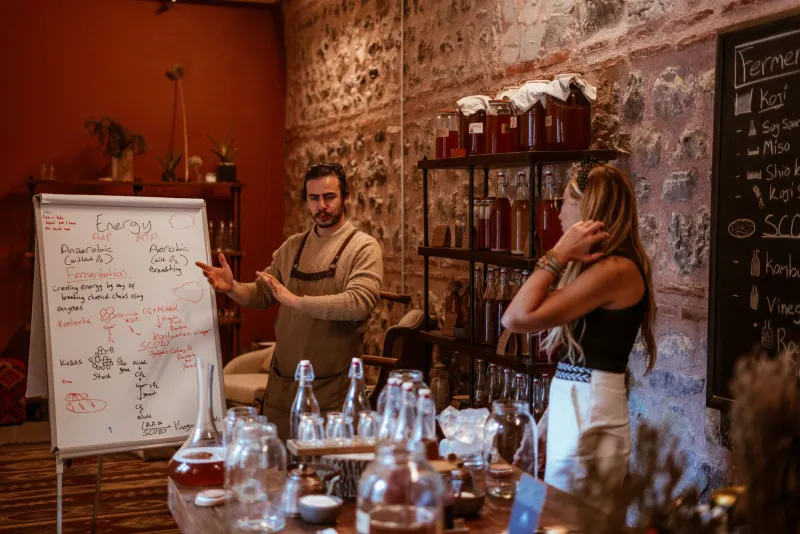
Photo by Photo by Grace Anne Bobadilla on Unsplash on Unsplash
Room Temperature Is a Myth
Every fermentation guide you've ever read says the same thing: ferment at room temperature. Simple, right? Except "room temperature" in a Phoenix apartment in August is hovering around 82°F, while a drafty New England farmhouse kitchen in February might barely crack 60°F. Those aren't minor variations. To the bacteria and wild yeasts doing the actual work inside your jar, that difference is enormous — the metabolic equivalent of sprinting versus crawling.
Temperature is, without exaggeration, the single most powerful variable in fermentation. More than salt ratios, more than starter cultures, more than the freshness of your cabbage. It governs how fast microbes reproduce, which strains dominate the ecosystem inside your vessel, and ultimately what your finished product tastes like. Understanding your home's thermal reality — not some abstract ideal — is what separates consistently great ferments from frustrating, unpredictable ones.
The Microbial Speed Dial
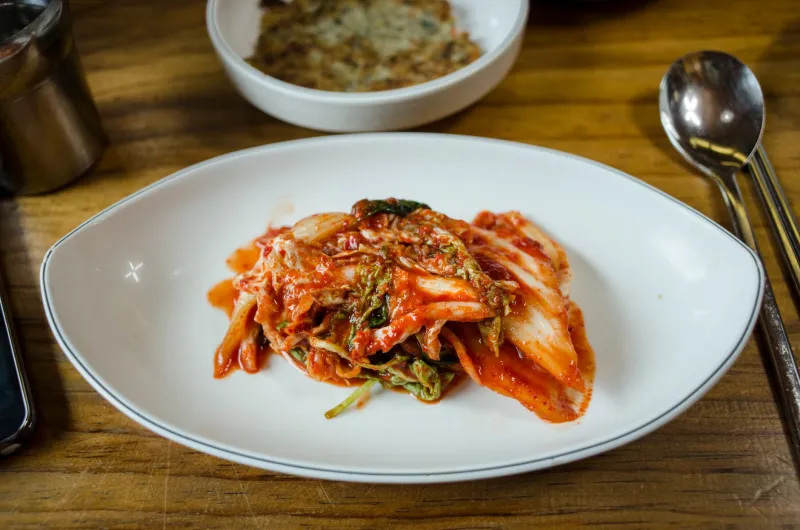
Here's the core science without getting too deep in the weeds: microbial activity roughly doubles for every 10°C (18°F) increase in temperature, up to a point. That means a batch of kimchi fermenting at 75°F is moving significantly faster than one at 65°F. Faster isn't always better, though — speed and complexity are often in tension.
At warmer temperatures, aggressive bacteria like Leuconostoc mesenteroides get a head start and burn through sugars quickly, but the ferment can also race past its flavor peak before you notice. The result? A jar that went from underfermented to mushy and overly sour in what felt like two days. Sound familiar?
Cooler temperatures slow everything down, which sounds like a disadvantage until you realize that slow fermentation tends to build more nuanced, layered flavors. It also gives the microbial community more time to diversify — different strains take turns dominating as pH drops gradually, producing a broader range of organic acids, esters, and aromatic compounds. That's why traditionally made kimchi, fermented in earthenware pots buried in the ground at near-freezing temps, has a complexity that fast-fermented versions just can't replicate.
What Your Climate Is Actually Doing to Your Ferments
The Deep South in Summer
If you're fermenting in Georgia, Louisiana, or South Texas between June and September, your kitchen is essentially a hot box even with AC running. Counter temps can easily sit at 78–84°F, and your ferments know it. Kombucha can complete a full first ferment in four to five days instead of the usual seven to ten. Sauerkraut might be ready in under a week. The upside: things move fast and the tangy punch develops quickly. The downside: you have to taste and check constantly, because the window between "not quite there" and "way too sour" is narrow. Consider moving active ferments to your coolest interior room, or even a cooler corner of a pantry, to buy yourself more control.
The Northeast and Midwest in Winter
Basements in New England and the upper Midwest are nature's fermentation chambers — and not always in a good way. A cold basement in January might sit at 55–60°F, which is wonderful for long, slow lacto-fermented vegetables but will leave your kombucha SCOBY sluggish and confused. If you're getting a thin, weakly acidic brew that takes two weeks and still tastes like sweet tea, cold is almost certainly your culprit. A seedling heat mat under your vessel, or relocating it near a heat source, can make a dramatic difference. Conversely, if you want a slow-fermented, deeply complex sauerkraut or pickle, that chilly basement might be your secret weapon.
The Pacific Coast and Its Fog Belt
San Francisco, Portland, Seattle — the maritime West Coast runs cool and damp year-round, with indoor temps that often stay in the 62–68°F range even in summer. This is genuinely excellent fermentation territory for most applications. The consistency is the real gift here. When your environment doesn't swing wildly between seasons, your fermentation timelines stabilize, your recipes become more repeatable, and you spend less time troubleshooting. If you're on the coast and your ferments feel reliable, that's not luck — it's geography.
The Interior Southwest
Denver, Albuquerque, Phoenix — the combination of altitude and aridity creates its own fermentation challenges. Evaporation is a real issue; your brine levels can drop faster than expected, potentially exposing vegetables to air. Low humidity also affects sourdough starters and open-vessel ferments differently than humid climates. The temperature swings between day and night can also be dramatic, meaning your ferment might experience a 15-degree shift in a 24-hour period. Stable, consistent environments — a cabinet away from windows, a temperature-controlled space — matter more here than almost anywhere else.
Practical Adjustments That Actually Work
Knowing your climate is step one. Here's how to actually adapt:
Keep a fermentation log. Write down the ambient temperature when you start a batch and check it throughout. Over a few seasons, you'll build a personal dataset that's more valuable than any recipe timeline.
Taste early, taste often. Especially in summer. Fermentation timelines in recipes are approximations based on average conditions. Your conditions aren't average — they're yours.
Use an inexpensive thermometer. A $10 digital probe thermometer placed near your fermentation vessel will tell you more than any recipe ever could. You're not measuring the air; you're measuring the environment your microbes are actually living in.
Adjust salt to temperature. Higher salt concentrations slow microbial activity — useful in hot weather to pump the brakes on a fast ferment. In cooler conditions, you can back off the salt slightly to compensate for slower activity. This is a lever most beginners don't know they have.
Think about vessel placement. The top of your fridge is warmer than the counter. The floor near an exterior wall is cooler. Cabinets above the stove are hot. Your kitchen has microclimates, and learning them is genuinely useful.
Working With Your Environment, Not Against It
There's a certain appeal to the idea that fermentation is something you control — that with the right recipe and the right technique, you'll get the same result every time. But the longer you ferment, the more you realize that the best results come from listening to your environment rather than imposing on it.
Summer heat means fast, bright, punchy ferments. Winter cool means slow, deep, complex ones. Neither is worse. They're just different expressions of the same living process, shaped by where you are and when you're doing it. Leaning into that — adjusting your expectations, your timelines, and your techniques to match your actual kitchen — is what makes fermentation feel less like following instructions and more like a genuine skill.
Your zip code really is an ingredient. So is the season. The sooner you start treating them that way, the better your ferments are going to get.