Too Much of a Good Thing: When Your Probiotic Habit Stops Helping and Starts Hurting

Photo by Photo by Lily Zakirova on Unsplash on Unsplash
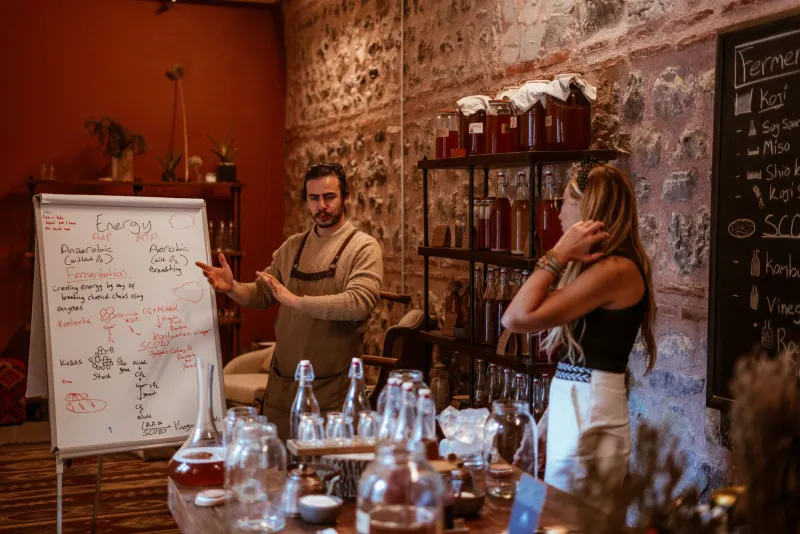
There's a particular kind of person who discovers fermented foods and goes all in. Maybe that's you. You started with a daily glass of kombucha, added a spoonful of kimchi to every meal, swapped your morning yogurt for kefir, and began batch-fermenting your own vegetables on the weekend. Your fridge looks like a science lab. Your friends think you're either very healthy or slightly unhinged.
And for a while, it feels great. Your digestion improves. You feel lighter, more energized, maybe even a little smug at brunch.
But then — slowly, almost imperceptibly — something shifts. The bloating that went away comes back. You feel gassy in a way that's no longer occasional but constant. You're tired in the afternoons even though your diet is, by every influencer metric, immaculate. And yet you keep doubling down, convinced the answer is more.
This is fermentation fatigue. And it's more common than the wellness industry wants to admit.
The Optimization Trap
American wellness culture has a complicated relationship with "enough." We are, as a culture, inclined to treat anything beneficial as something that becomes more beneficial the harder we push it. Sleep optimization. Cold plunges. Intermittent fasting windows measured to the minute. And yes, probiotic consumption.
The gut health conversation exploded over the past decade, and for good reason — the science is genuinely fascinating. Research into the gut microbiome has revealed connections to immune function, mental health, inflammation, and metabolic health that we're only beginning to understand. Fermented foods, with their living cultures and bioactive compounds, absolutely have a role to play in supporting that system.
But somewhere between "fermented foods are good for you" and "I need to consume six different probiotic sources before noon," something goes sideways.
Social media deserves some of the credit — or blame — here. When gut health influencers post daily "what I eat" roundups featuring four fermented items per meal, it sets an implicit standard that feels clinical even when it's dressed up in aesthetic jars and linen napkins. The message, intended or not, is that your microbiome is always a work in progress and you are always behind.
What's Actually Happening in Your Body
Here's the thing about probiotics: they are not a case of simple addition. You don't just keep stacking beneficial bacteria and watch your health scores climb indefinitely. The gut is an ecosystem, and ecosystems have carrying capacities.
When you flood your digestive system with large quantities of fermented foods — particularly if you're doing it rapidly or inconsistently — you can trigger what researchers sometimes call dysbiosis, an imbalance in the microbial community. Ironically, this is the very condition that probiotic-heavy diets are supposed to prevent.
Symptoms can include bloating, gas, loose stools, brain fog, and even heightened anxiety. For people with conditions like small intestinal bacterial overgrowth (SIBO) or histamine intolerance, a diet aggressively loaded with fermented foods can actively worsen symptoms rather than relieve them. Fermented foods are naturally high in histamines — a byproduct of the fermentation process — and for those who struggle to break down histamine efficiently, that daily kombucha habit might be contributing to headaches, skin flushing, or fatigue.
None of this means fermented foods are dangerous. They're not. But context matters enormously, and your body is not a universal template.
The Psychological Weight of Gut Optimization
There's a dimension to this conversation that doesn't get nearly enough attention: the mental load of eating this way.
For some people, the pursuit of perfect gut health slides gradually into something that looks a lot like orthorexia — an obsessive focus on eating "correctly" that creates anxiety, social isolation, and a distorted relationship with food. When missing your evening kefir feels like a moral failure, or when you decline a meal out because you can't control the probiotic content, the health benefits of the habit have long since been swamped by its costs.
This isn't a niche concern. Therapists and registered dietitians across the country are increasingly seeing clients whose wellness routines have become sources of stress rather than support. The irony is brutal: chronic stress is one of the most reliable ways to disrupt gut health. All that careful optimization, undermined by the anxiety the optimization itself creates.
What Listening to Your Body Actually Looks Like
We talk a lot in wellness spaces about "listening to your body," but it's usually framed as a way to justify eating more of something good. What it rarely means, in practice, is giving yourself permission to pull back.
Listening to your body might look like noticing that you feel better on days when you skip the kombucha. It might mean acknowledging that a particular fermented food — even one you love, even one that's technically excellent for most people — doesn't agree with your system right now. It might mean taking a week off from all of it and paying attention to what changes.
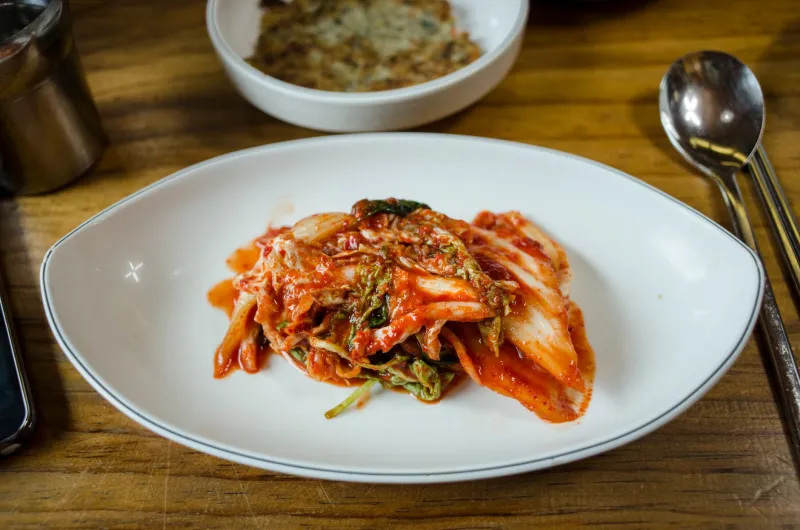
At Hale Fermented, we believe deeply in the power of these foods. We've seen what a well-made kimchi or a properly brewed kombucha can do for people who've struggled with digestion for years. That belief is real and it's rooted in both tradition and science.
But we also think the most honest thing we can tell you is this: fermented foods are tools, not obligations. The goal was never to consume as many as possible. The goal was to feel better — more energized, more comfortable in your own body, more connected to what you're eating and why.
Finding Your Actual Baseline
If any of this is resonating, here are a few practical starting points:
Scale back before you add. If you're experiencing persistent digestive discomfort despite a probiotic-rich diet, try reducing your fermented food intake for two to three weeks rather than adding more. See what shifts.
Diversify your sources, not your volume. A small amount of several different fermented foods — a little kimchi here, a few sips of kombucha there — is likely more beneficial than large quantities of one thing. Variety supports microbial diversity; excess doesn't.
Work with someone who knows the science. A registered dietitian familiar with gut health can help you figure out whether your symptoms point to something specific, like histamine intolerance or SIBO, that might require a tailored approach.
Separate the food from the identity. Fermented foods are delicious and genuinely nourishing. They don't need to be a personality trait or a performance of health. Eat them because they taste good and make you feel good — full stop.
The fermentation traditions we draw from at Hale Fermented — Korean, Eastern European, South Asian, and beyond — were never about optimization. They were about preservation, community, flavor, and a kind of practical wisdom about what the body needs. That wisdom is worth recovering.
Your gut doesn't need you to be perfect. It needs you to pay attention.