No Pantry, No Problem: The Renter's Guide to Building a Fermentation Station in 400 Square Feet

Photo: Hine, Lewis Wickes; National Child Labor Committee Collection, Public domain, via Wikimedia Commons
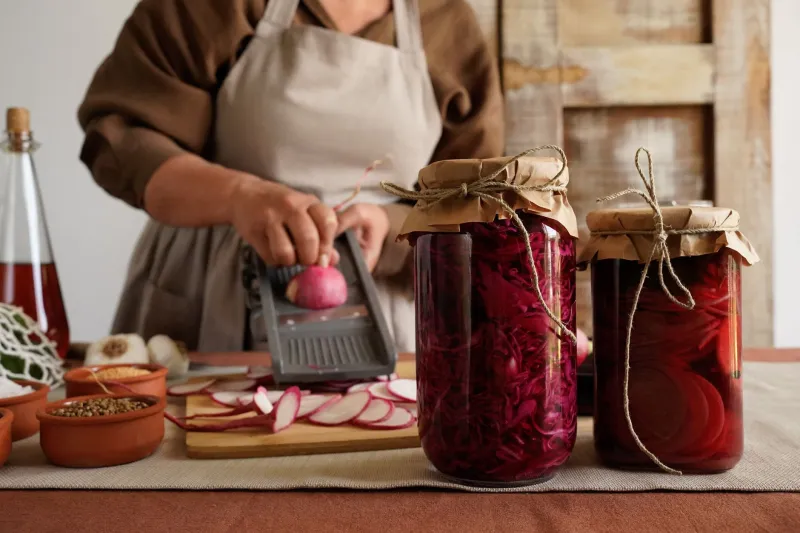
Every fermentation photo you've ever scrolled past features the same fantasy: a sun-washed farmhouse kitchen, copper pots, a stone root cellar stacked with crocks. It's lovely. It's also completely out of reach for the roughly 44 million American households that rent — many of them in apartments where the 'pantry' is a single shelf above the fridge.
Here's the truth the farmhouse aesthetic hides: fermentation was invented by people with very little space. It's a preservation method for small homes, not a hobby for big ones.
Rethinking Where Ferments Actually Live
Fermentation doesn't need a dedicated room. It needs a spot that's roughly 60–75°F, out of direct sunlight, and away from your face (more on smells later). Start scouting your apartment for microclimates:
- The top of the fridge is the classic — appliances give off gentle, consistent warmth
- Inside a kitchen cupboard works if you crack the door during active fermentation
- A closet shelf is ideal for temperature-stable secondary ferments like kombucha's second brew
- Under the bed sounds absurd until you learn that a lidded cooler makes a perfectly serviceable fermentation chamber
One Brooklyn renter we know keeps three gallon jars of kimchi in a plastic bin under her kitchen sink, labeled with painter's tape. Her grandmother in Seoul would recognize the setup immediately — just with better plumbing.
The Smell Question (Your Roommate Will Ask)
Let's address it directly: active fermentation smells like, well, fermentation. In a shared-wall building, that matters.
The good news is that the funk is mostly a phase. Smells peak during the first week of active fermentation, then mellow dramatically. Manage it with three moves:
- Use airlock lids or a tight cloth cover — most odor is escaping CO2, and airlocks trap it
- Burp jars in the bathroom with the fan running, not over the kitchen counter
- Time big opens — if you're cracking a pungent jar, do it before you leave for work, not before your roommate's date arrives
Sauerkraut is remarkably polite. Kimchi is not. Plan accordingly, and consider gifting your downstairs neighbor a jar. Bribery is a time-honored fermentation tradition.
Small-Space Ferments That Actually Thrive
Not all ferments are created equal for apartment living. Your best bets:
- Kombucha: a single half-gallon jar takes up less real estate than a cereal box and loves room-temperature chaos
- Small-batch sauerkraut: one jar, one cabbage, one week
- Fermented hot sauce: blends down to almost nothing and keeps forever
- Quick vegetable pickles: done in days, eaten fast, no long-term storage needed
Skip the five-gallon crocks for now. Small batches also mean faster feedback — you'll learn the craft quicker when each experiment costs one cabbage instead of five.
The Renters' Revival Is Already Here
There's a quiet irony in all this. The generations who fermented out of necessity did it in cramped tenements and crowded city kitchens, not farmhouses. The apartment fermenters of today — the Chicago studio dweller with a shelf of kombucha, the Oakland renter with kimchi under the sink — aren't making do. They're continuing the tradition exactly where it's always lived: wherever people have a jar, some salt, and a little bit of room.
Your lease says you can't renovate. It says nothing about a bubbling jar on top of the fridge.